
New rural settlement
Land may allow coherent homes, gardens, workshops, and common spaces; livelihoods, parish access, infrastructure, and cost must come first.
THE VILLAGE FRAMEWORK

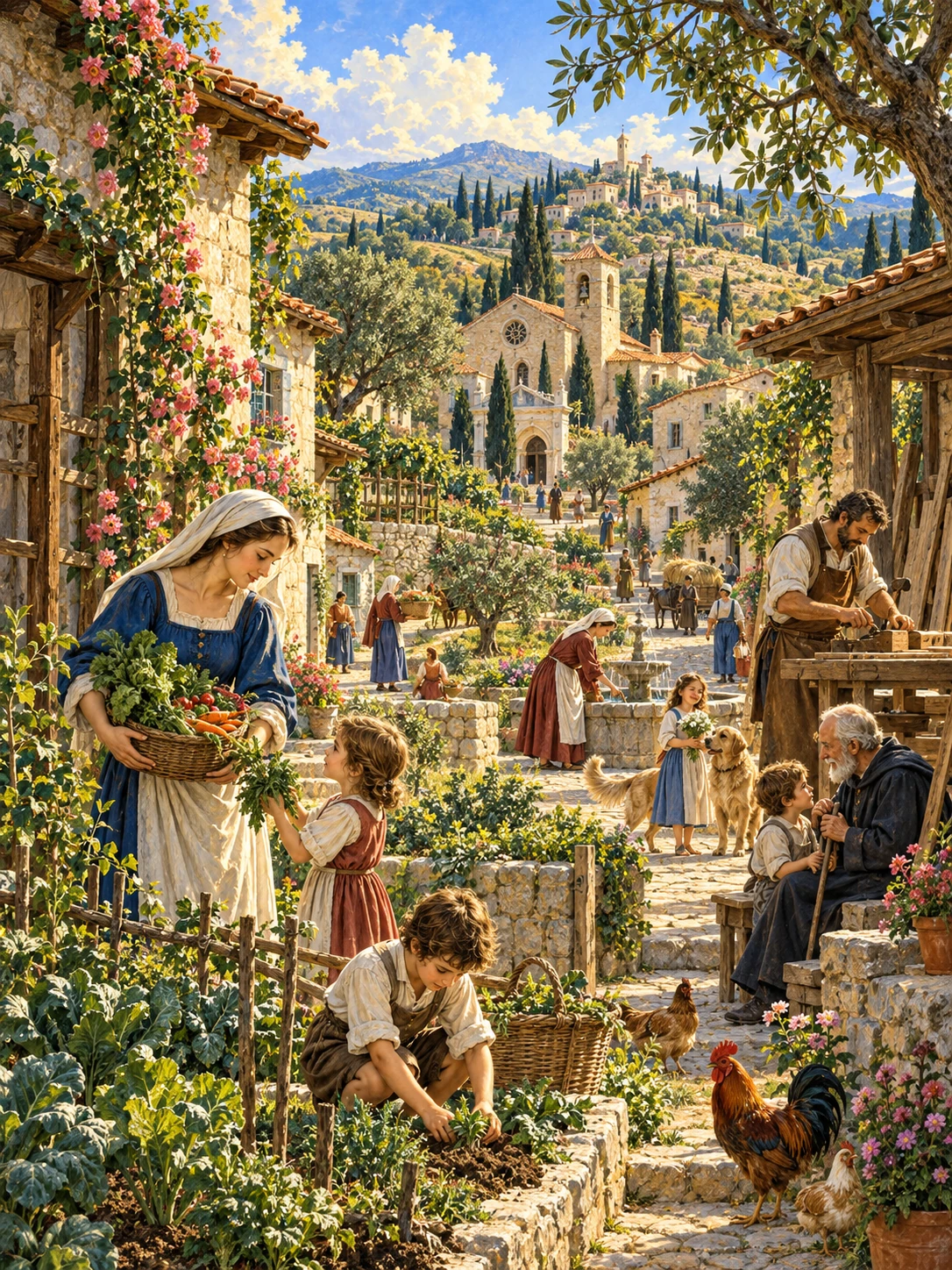
A village is not only a pattern of streets. It is a living relationship among households, worship, education, work, hospitality, privacy, and shared duties.
THE PRINCIPLE
A completed village can be a useful horizon. The first practical act may be inviting another family into your home to pray. The Framework does not require everyone to move, buy property, or wait for a benefactor.
Solidarity means sharing burdens and pursuing the common good; subsidiarity protects the proper work of households and smaller bodies. Each is needed to prevent both isolation and the absorption of family duties into large institutions.
Buildings are tools, not the final goal. We ask whether persons can live their vocations well: children learning, adults working, elders remaining useful and loved, and the vulnerable receiving help without losing dignity.
Start with the Rosary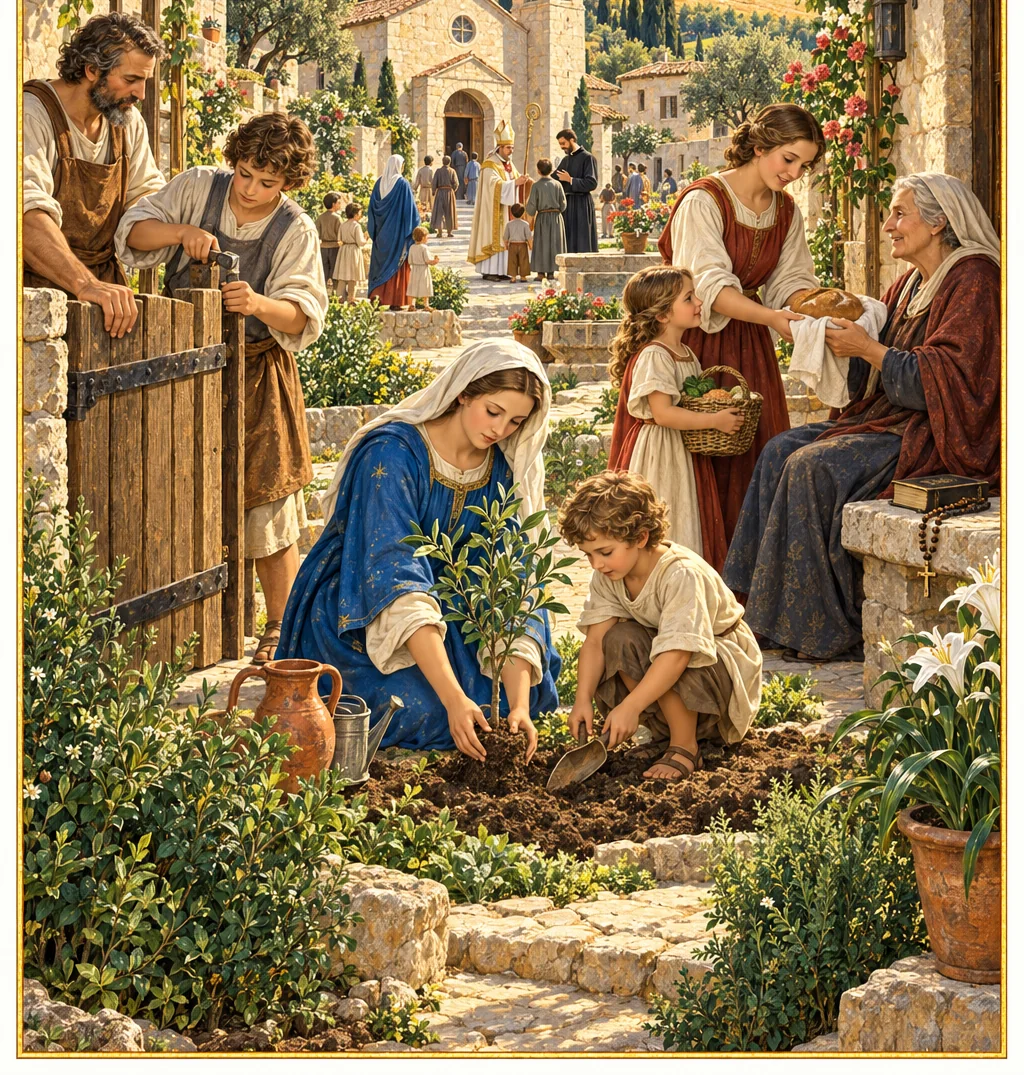
NOT JUST A NEW DEVELOPMENT
Land may allow coherent homes, gardens, workshops, and common spaces; livelihoods, parish access, infrastructure, and cost must come first.
Repair and inhabit existing houses, shops, and streets while strengthening the community of people already living there.
Several nearby households can begin with prayer, shared teaching, gardens, assistance, and useful local trades.
Courtyards, rooms above shops, and proximity to a parish can sustain deep local cooperation within a larger city.
A COHERENT FRAMEWORK
Mixed-age household clusters should allow help to be near at hand, while thresholds, courtyards, gardens, and deliberate design protect the family’s private life.
Libraries, workshops, halls, a real inn, and other shared spaces should grow from demonstrated use and sustainable stewardship—not the wish to fill a master plan.
Parents retain their responsibility. Competent teachers combine strong academic disciplines with wonder, discussion, craft, nature, music, and intergenerational formation.
Farming, trades, services, and outside employment can all serve local life. Dependable provision, fair property terms, and economic clarity matter more than picturesque self-sufficiency.
Prayer, sacramental life, feasts, fasting, hospitality, land, and shared customs give a human rhythm to the household and village.
The Fraternity, parish, businesses, property management, civil authority, and patrons have distinct roles. Subsidiarity requires clarity, accountability, and appropriate limits.
The fuller planning proposal develops these themes in greater detail: patronage, family clusters, the inn, school life, the Christian year, property and livelihoods, distinct public responsibilities, and the movement from friendship toward durable institutions.
PRACTICAL FIRST STEP
The proposed first step in each setting is a recurring Friday Night Rosary among neighbors.